
5 Questions to Ask Before Hiring a Construction Junk Hauler

Quick Summary
A construction junk hauler is a removal service built for jobsite debris, which is heavy, bulky and often mixed, and must fit active schedules and site access. Look for one that matches your schedule, offers the right removal model, and gives written, itemized quotes before work begins.
Construction debris is heavy, bulky and often mixed, so it differs from household junk.
Common removal models are dumpster rental, full-service pickup and recurring pickups.
Ask whether a quote is based on volume alone or volume plus weight.
Mixed loads are harder to sort and divert, which can affect the price.
Request a certificate of insurance and the names of disposal facilities before the first pickup.
Need construction debris gone fast?
Junk Outlawz hauls construction debris from active sites in Ocala and surrounding Florida communities.
Table of Contents
Why Construction Sites Need a Different Kind of Junk Hauler
Last Updated: November 15, 2026
Construction sites generate debris faster than most homeowners ever will, so every project needs a dependable construction junk hauler. A single renovation can produce drywall, lumber offcuts, broken tile, and packaging in a matter of days. Standard household junk removal rarely fits that workflow. Contractors need a construction junk hauler that understands jobsite access, material sorting, and tight schedules.
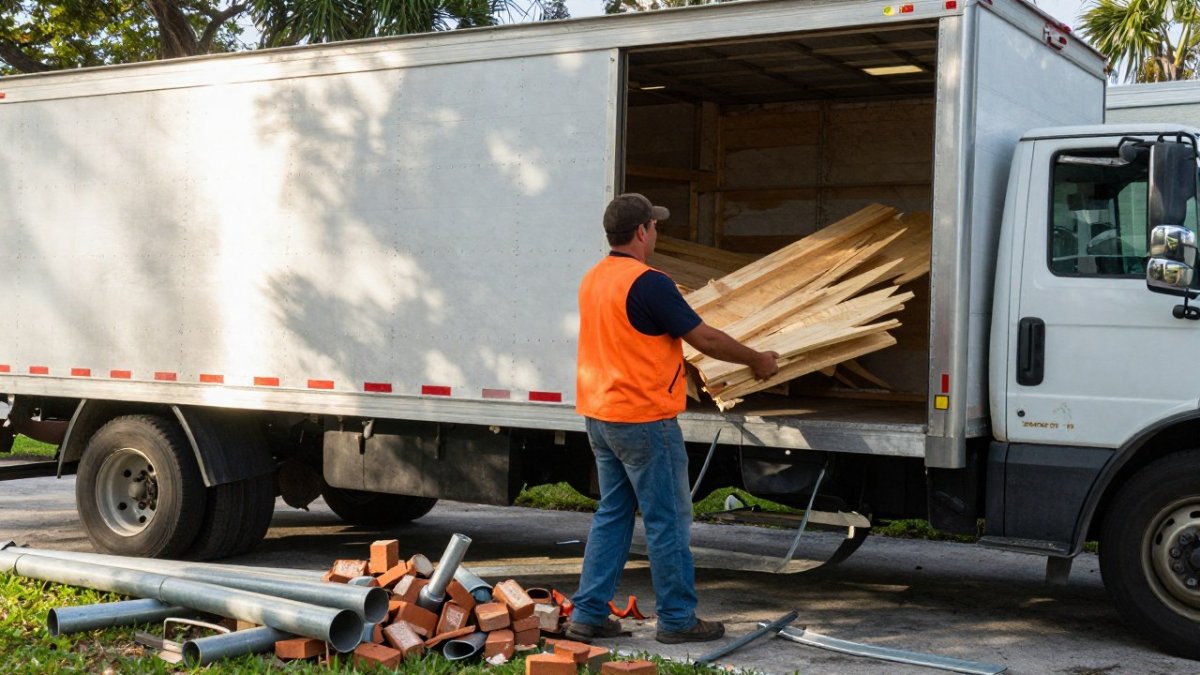
Construction debris is heavy, bulky, and often mixed. A load might include concrete pieces, treated wood, metal fixtures, and cardboard, all in one pile. Each material may follow different disposal rules. A hauler that treats it like a garage cleanout can leave a site cluttered or hit you with unexpected charges at the curb.
Working on an active site adds pressure. Crews need the debris gone before the next trade arrives. Delays stack up quickly when a pickup is missed or arrives without the right equipment. Choosing a local junk hauler for construction sites means looking for someone who can match your schedule and your site conditions.
How Construction Debris Removal Is Structured on an Active Site
Most active sites run debris removal in phases. Crews clear rough material during demolition, sort it during framing and finish work, and remove the rest at project close. A good hauler fits into each phase instead of arriving once at the end.
Common removal models include:
Dumpster rental: You load the container yourself and the hauler swaps it when full.
Full-service pickup: The hauler arrives, loads debris, and removes it from the site.
Recurring pickups: Scheduled visits keep pace with a multi-week or multi-phase project.
Each model suits different project sizes. Dumpster rental works well when you have space and labor to fill it. Full-service pickup fits sites where crews are busy with trade work. Recurring pickups help when debris builds up steadily over weeks.
What Drives Construction Debris Hauling Cost
Construction debris hauling cost depends on several factors, and pricing varies by quantity, material type, access, and the schedule you need. Florida-specific breakdowns of prices and removal options are available in Construction Debris Removal in Florida: Costs and Options. Junk Outlawz does not publish fixed construction rates, so use the points below to understand what affects your quote and request a written estimate from us for current pricing.
Key cost drivers include:
Volume and weight: Haulers often price by the volume a load occupies and may adjust for weight. A pile of concrete offcuts can be small in volume but heavy. Ask whether the quote is based on volume alone or volume plus weight.
Material mix: Mixed debris is typically harder to sort and dispose of than separated materials. Clean loads of a single material may be easier to recycle, while mixed loads are often harder to divert.
Access and labor: Tight driveways, long carries from the pile to the truck, stairs, or limited parking can add labor time. Tell the hauler about gates, overhead wires, soft ground, and any locked areas before the quote is finalized.
Timing and scheduling: Urgent pickups and one-off calls can affect the quote, so ask how scheduling changes the price.
Disposal requirements: Some materials need specific handling at the disposal facility. Some materials, such as tires, mattresses, appliances, and electronics, may need separate handling, and hazardous items such as paint, solvents, and batteries may require a separate disposal path. Ask the hauler what applies to your load.
Minimum charges: Ask whether a minimum load fee applies and whether it changes for construction debris versus household junk.
When you compare quotes, ask each hauler to itemize these factors. A low headline number can hide surcharges for weight, access, or sorting. Clear, written estimates make it easier to compare providers fairly. You can request a free quote from Junk Outlawz to review the factors that apply to your site.
Watch out: a quote that does not mention weight limits or disposal fees can grow after the load is on the truck, so confirm the all-in price before the crew arrives.
The main factors that affect a construction debris hauling quote are summarised below.
Cost factor | What to check | Why it matters |
Volume and weight | Is the quote volume only, or volume plus weight? | A small pile of concrete can be heavy |
Material mix | Clean single-material loads or mixed debris? | Mixed loads are harder to sort and divert |
Access and labor | Gates, stairs, long carries, soft ground | Tight access adds labor time |
Timing and scheduling | Urgent or one-off pickups | Scheduling can change the price |
Disposal requirements | Tires, appliances, electronics, hazardous items | Some items need separate handling |
Minimum charges | Minimum load fee for construction debris | Can differ from household junk pricing |
Preparing Your Jobsite for Pickup: Access, Safety and Sorting
Preparation saves time on pickup day. Start by clearing a path wide enough for a truck or loader, and keep it free of parked vehicles and loose materials. Mark the pickup zone so the crew knows exactly where debris is staged.

Separate materials before the truck arrives. Keep metal, wood, drywall, and general trash in distinct piles when possible. Sorted debris is faster to load and may reduce disposal complications. Keep hazardous items such as paint, solvents, and batteries separate and tell the hauler about them in advance.
Safety matters on every site. Make sure walkways are clear, pile debris away from edges and open excavations, and keep workers out of the loading zone during pickup. Confirm access requirements before the crew arrives so no one is surprised by a locked gate or overhead hazard.
Recycling Construction Materials and Disposal Accountability
Many construction materials can be recycled, including clean wood, metal, concrete, and certain roofing materials. Recycling reduces landfill volume. Ask your hauler how they sort loads and where materials go after pickup.
Accountability is part of the job. Confirm that your hauler can explain its recycling and donation practices and where materials end up after pickup.
Choosing a Hauler: Insurance, Scheduling and Recurring Pickups
Selecting a local junk hauler for construction sites comes down to a few checks that separate a reliable contractor-grade provider from a general cleanup service. You can compare Florida junk removal companies by service, pricing, and disposal practices side by side.
Insurance and credentials. Ask for a certificate of insurance showing general liability coverage and, where applicable, commercial auto coverage for the hauling vehicles. Confirm the policy is current and that the limits match the size of your project. If the hauler uses subcontractors, ask whether those crews carry their own coverage. Licensing requirements for junk haulers vary, so confirm with your local business licensing office what applies in your area. A hauler who hesitates to share proof of insurance is a risk you do not need on an active site.
Disposal accountability. Ask where materials go after pickup. A reputable provider can name the disposal facilities and recycling centers they use and explain how they sort loads. Confirm that the hauler uses permitted facilities and ask whether disposal receipts or tickets are available. This matters if your project has waste-diversion goals or if you need documentation for a client or general contractor.
Scheduling reliability. Ask how far in advance you need to book and what happens if a pickup window slips. For active sites, a missed pickup can stall the next trade. Find out whether the hauler offers confirmed time windows and notifications, and what backup plan it has if a truck breaks down. A common pattern is to book the first pickup early in the project so you learn the hauler's communication style before you are under deadline pressure.
Recurring pickups for multi-phase projects. Contractors often need predictable service across demolition, framing, finish work, and closeout. Discuss recurring pickups upfront so the schedule fits your timeline. Ask whether the rate changes for scheduled service versus one-off calls, and whether the hauler can scale up during a heavy week. Put the schedule in writing, including the number of visits, the materials covered, and the notice required to change or cancel a pickup.
Written quotes and contract terms. Compare written quotes line by line. Use our checklist for spotting hidden fees and comparing estimates fairly before you commit to a hauler. Look for hidden fees, minimum load requirements, and charges for same-day service. Confirm what happens if a load exceeds the quoted volume or weight, and whether there is a fuel or environmental surcharge. A clear estimate protects both your budget and your schedule.
Watch out: a hauler who cannot produce a certificate of insurance or name a permitted disposal facility before the first pickup may be a liability on a construction site, regardless of price.
Booking Your First Construction Cleanup With Junk Outlawz
Booking a construction cleanup should be straightforward. Start by describing your materials, estimated volume, site access, and target pickup date. Mention any hazardous items or special disposal needs so the crew can prepare the right truck and equipment.
Junk Outlawz offers same-day hauling and upfront pricing so you know the scope before work begins. For active sites in Ocala and surrounding Florida communities, call Junk Outlawz at 352-830-1517 to schedule your first pickup and talk through your project needs.
Junk Outlawz helps contractors and property owners clear debris quickly and responsibly. Call 352-830-1517 to get started on your next construction cleanup.
Frequently Asked Questions
What materials can construction junk haulers take?
Most construction junk haulers accept clean wood scraps, drywall, flooring, roofing shingles, concrete and masonry, metal, cardboard and packaging, and general renovation debris. Materials that are often restricted include paint, solvents, asbestos-containing products, batteries, tires and certain treated wood. Hazardous materials usually require a separate disposal service. Ask the hauler to confirm the accepted list for your specific job before loading, since acceptance rules vary by facility and by material.
How do I choose a junk hauler for a construction site?
Ask whether the company carries commercial general liability and workers' compensation insurance, and request a certificate of insurance if your contract requires one. Check that they handle construction debris specifically, not just household junk. Ask how they sort and where material goes, whether they can provide disposal receipts, and whether they can schedule recurring pickups around your crew's timeline. Request a written quote that lists what is included.
Where can I get rid of construction debris?
Construction debris can go to a licensed landfill, a construction and demolition recycling facility, or a transfer station, depending on the material and local rules. A full-service hauler typically takes care of transport and disposal for you. If you handle it yourself, you will need a truck or dumpster rental and a facility that accepts your material. Keep disposal receipts in case your general contractor or inspector asks for them.
Can construction debris be recycled or donated?
Many construction materials can be recycled, including clean wood, metal, concrete, masonry and cardboard. Usable fixtures, cabinets, doors and some lumber can often be donated to salvage programs or reuse centers. Recycling depends on how clean and sorted the material is, so keeping materials separated on site improves the chances that a load can be recycled rather than landfilled. Ask your hauler which materials they divert and how they document it.

Comments